




 America Latina
 ANZ
ANZ
 Austria
 Germany
 North America
 Italy
Italy
 Brazil
 United Kingdom
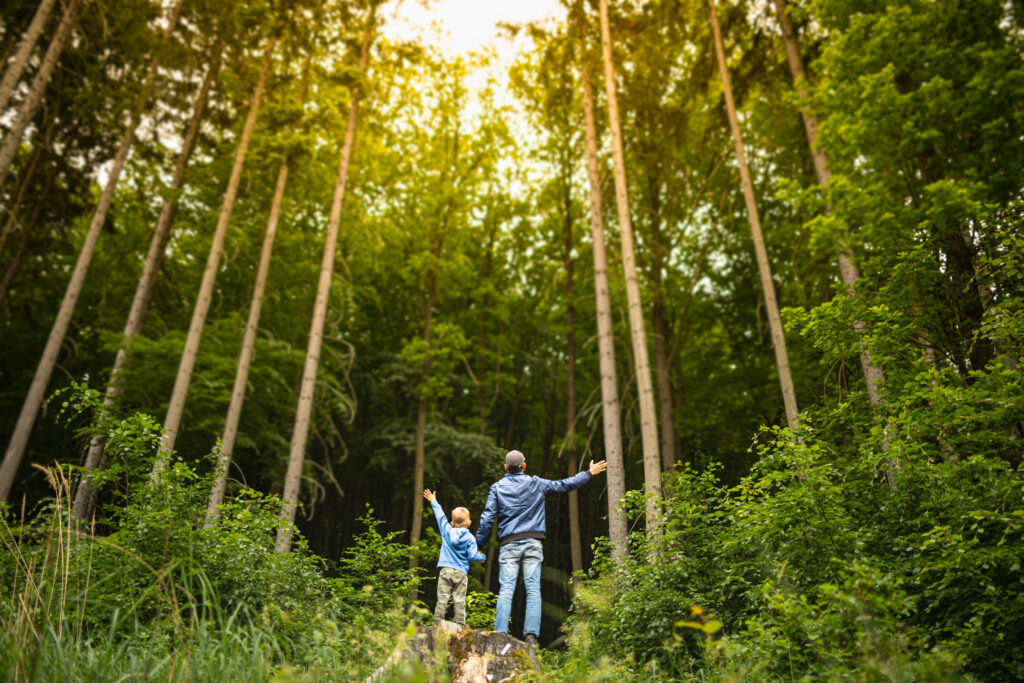
There’s a reason a walk in the woods feels different from a walk anywhere else. Something in you slows down in a way that’s hard to explain but impossible to miss. It turns out researchers have spent the last few decades figuring out exactly what’s happening there, and the findings are kind of amazing.
What Is Forest Bathing?
Forest bathing, shinrin-yoku in Japanese, or “taking in the forest atmosphere,” isn’t hiking. It’s the simple, deliberate act of spending quiet time among trees, engaging your senses, and letting the environment do its thing. Developed in Japan in the 1980s as a response to rising burnout and stress, it’s since become a recognized therapeutic practice in Japan, South Korea, Finland, and beyond.
What the Research Actually Shows
Time among trees produces measurable physiological changes—not just a feeling of calm, but actual shifts in how your body functions.
- Stress hormones drop. Cortisol levels decrease significantly after even short periods in a forest, compared to urban settings.
- Blood pressure and heart rate drop, too, with effects that can persist for hours or days afterward.
- Immune function improves. Trees emit aromatic compounds called phytoncides that, when inhaled, appear to boost natural killer (NK) cell activity—white blood cells involved in fighting infection. One study found a single two-hour forest walk produced NK increases that lasted more than a week.
- Mood and mental clarity improve, with links to reduced anxiety, better sleep, and less rumination.
Nature Deficit and Why It Matters
The average American spends over 90 percent of their time indoors and increasingly, indoors means in front of screens. Researcher Richard Louv coined the term “nature deficit disorder” to describe the effects of this disconnect, linking it to rising rates of anxiety and attention difficulties, particularly in children. Forest bathing is an accessible, essentially free intervention for some of the most common health complaints of modern life.
Paper, Trees, and the Natural World
Here’s where it gets interesting for paper lovers. There’s compelling thinking that our relationship with natural materials keeps us connected to the natural world in ways that matter for wellbeing. Paper comes from trees; it carries warmth, texture, and the feel of something organic. Researchers studying tactile experience have noted that natural materials like wood, stone, and paper activate different sensory pathways than synthetic ones, tending to produce calmer, more grounded responses. A notebook isn’t a forest, but it’s not nothing either.
Handwriting reinforces this. Studies on note-taking have found that writing by hand leads to deeper processing and better retention than typing. Journaling on paper is associated with greater emotional processing and stress reduction, a small but genuine act of mindfulness.
Getting Started
A few principles worth keeping in mind:
- Leave the headphones behind and engage with the environment rather than filtering it out.
- Go slow. Wander, sit, let your eyes adjust. This isn’t about distance.
- Put the phone away. Even having it visible reduces the restorative effects.
- Two hours is a useful benchmark, but even twenty minutes is better than none.
The Through Line
Forests give us paper. Paper connects us to forests. And time in forests is one of the better things we can do for our health. There’s something satisfying about that loop, the idea that loving paper is part of a longer relationship with the natural world that does us genuine good.
Next time you open a new notebook, take a moment to appreciate where it came from. Feel the grain of it, the slight give of the cover, the resistance of a fresh page under your pen. And if you can, take it with you into the trees. Leave the phone behind, find somewhere to sit, and let the forest do its thing, then sketch, paint and write about it.
Learn more about our forests at Love Paper!