



 American Latina
 Austria
 Brazil
 Czech
Czech
 Finnish
 France
 Germany
 Italy
Italy
 North
America
North
America
 Norway
 Polish
 Portugal
 Spain
Spain
 Sweden
 United Kingdom
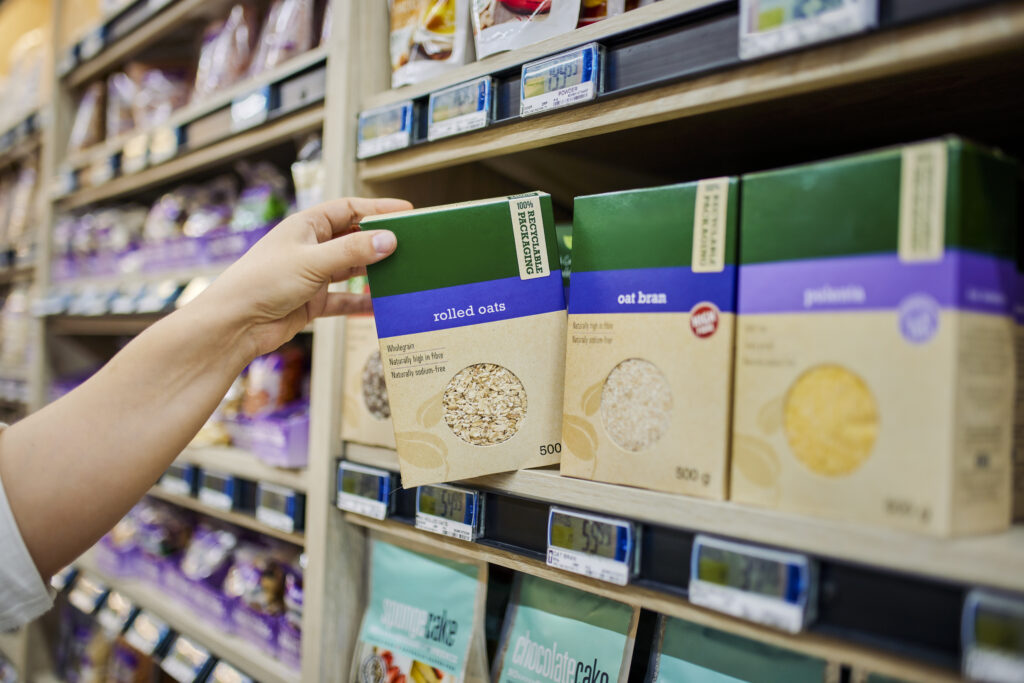
Food packaging has come a long way from the days of leaves, or paper tied with string. These days, it plays a quiet but crucial role in keeping your food safe, fresh, and exactly what it says it is on the label. Here’s how:
1. It protects your produce.
Fresh fruits and vegetables can travel hundreds of miles before they reach your grocery store. Even with built-in protection like skins and peels, they’re still vulnerable to bruising along the way. Corrugated cardboard, which, fun fact, was originally used as lining for top hats in the 19th century, has become the go-to for shipping fresh food. The heat generated during manufacturing kills bacteria, so the surface your food touches starts out clean. And since cardboard is easy to recycle, it’s rarely reused, which cuts down on cross-contamination risk.
2. It makes tampering obvious.
Ever tried to sneak into a box of cookies before dinner and make it look untouched? Nearly impossible, and that’s the point. Packaging is engineered with a precise mix of cardboard density and adhesives so any attempt to get inside leaves a visible trace. Mildly frustrating at home, genuinely reassuring at the store.
3. It keeps allergy sufferers informed.
Advances in food-grade printing mean ingredients, allergen warnings, and nutritional info can be printed clearly right on the package. Not long ago, this information was buried in fine print or hard to find at all. Now it’s right there before anything goes in your cart.
4. It keeps food fresh longer.
Paper and cardboard act as a barrier against oxygen and moisture, the two biggest culprits behind stale, moldy, or off-tasting food. Less air exposure means slower bacterial growth and better flavor for longer. Good for you, less wasteful overall.
5. It’s regulated for your safety.
Any part of food packaging that actually touches your food has to meet FDA standards. That means materials are vetted to prevent harmful compounds from leaching into what you eat. Butcher paper, for example, requires FDA food-grade approval before it can come into contact with meat or poultry. Pediatricians also tend to recommend wax paper over plastic wrap for sandwiches; it sidesteps exposure to chemicals like phthalates.
6. It helps frozen meals heat more evenly.
Some microwavable containers use paperboard with a susceptor ring (a silver, aluminum-based layer) that absorbs microwave energy more efficiently than a plain tray. The heat disperses more evenly across your food, helping it reach the temperatures needed to eliminate bacteria all the way through. Better heat distribution, safer meal.
7. Packaging can create an aseptic environment.
You’ve probably noticed more soups and broths showing up in cardboard cartons instead of cans. There’s a good reason for that. The carton gets sterilized in a heated hydrogen peroxide bath (which is then fully removed) before pasteurized food is sealed inside. The result? Diced tomatoes, dairy-based recipes, and broths that stay fresh and tasty for up to six months without refrigeration. Pretty neat for a cardboard box.
Next time you tear into a package, that’s a small, invisible system of science and safety doing its job, and doing it well.