



 America Latina
 ANZ
ANZ
 Austria
 Germany
 North America
 Italy
Italy
 Brazil
 United Kingdom

We’re so used to paper playing a part in our day-to-day lives that it’s easy to forget the huge role it has played in the history of mankind. From preserving ancient knowledge to revolutionizing communication methods, paper isn’t just a handy resource: it represents the innovation of the human race.
Paper’s evolution is as fascinating as it is long, beginning with ancient materials like papyrus and clay tablets, evolving from its humble origins over centuries to arrive at the clean, white and sustainable sheets of paper we know and use today.
Ancient Writing Materials
Before paper, civilizations relied on other materials to record information. In Mesopotamia (modern-day Iraq), scribes would etch Cuneiform (a system of writing used in the Ancient Middle East) onto clay tablets. In Egypt, the use of papyrus was more common, the art of making which is believed to date as far back as 3000 BCE. Papyrus sheets were made by layering and pressing strips of the papyrus plant, creating a durable, inflexible surface on which to write with reed brushes.
In China, bamboo strips and silk served as the primary mediums for recording information at this time. Meanwhile, in Europe and the Middle East, parchment and vellum (made from treated animal skins) became the standard. These materials, while effective, would have been costly and time-intensive to produce, highlighting the need for a more practical alternative.
The Invention Of Paper In China
Around 105 CE, Cai Lun, a Chinese court official, was credited with having invented paper. His process involved macerating mulberry bark, hemp, and rags into a slurry, which was then spread onto a flat screen, pressed, and dried to form thin sheets. Creating a lightweight, flexible, and relatively inexpensive material that could be used for writing and art was highly innovative for the time.
Quickly after the invention, paper became integral to Chinese society, enabling the production of bureaucratic documents, books, and even artwork. The rapid development of movable-type printing in China further emphasized the usefulness of this new material.
The Global Spread of Papermaking
Papermaking techniques gradually spread beyond China, reaching Central Asia and the Islamic world by the 8th century. During the Battle of Talas in 751 CE, Chinese papermakers were captured and taken away from their homeland, where they were forced to introduce their craft to the Islamic Empire. The process was then further refined, with cotton and linen fibers being preferred over bark and hemp.
By the 12th century, paper had reached Europe, where it became indispensable for both secular and religious purposes. European papermills, particularly those in Spain and Italy, adapted the technology further, enabling mass production. This new availability of paper effectuated the spread of ideas during the late Middle Ages, laying the groundwork for the Renaissance period.
The Printing Revolution
The 15th century saw a seismic shift in the history of paper with the invention of the printing press by Johannes Gutenberg. For the first time, books and pamphlets could be produced on a massive scale, which made knowledge more accessible than ever before. This era, unsurprisingly, saw an explosion in literacy rates and the democratization of information, all made possible by the new affordability and availability of paper.
Paper was not only the foundation of the printing revolution, but also an essential element of cultural movements, such as the 16th century European Reformation and Scientific Revolution. Gutenberg’s press, combined with a growing network of paper mills, helped to transform Europe into a hub of innovation and learning which hadn’t previously been possible.
Industrialisation And Mass Production
The 19th century marked another huge turning point for paper, with the industrialization of papermaking. The development of the Fourdrinier machine in 1806 enabled the continuous production of paper rolls, which both drastically reduced costs and increased efficiency. Additionally, the discovery that wood pulp could be used as a raw material instead of rags was revolutionary for the industry. Wood was abundant and sustainable, and would allow paper to become a staple of everyday life.
With mass production now available, paper found new applications, from newspapers and books to packaging and stationery. The industrial era’s advancements not only made paper more accessible, but also fuelled global literacy rates and education.
Paper Today – Innovation And Sustainability
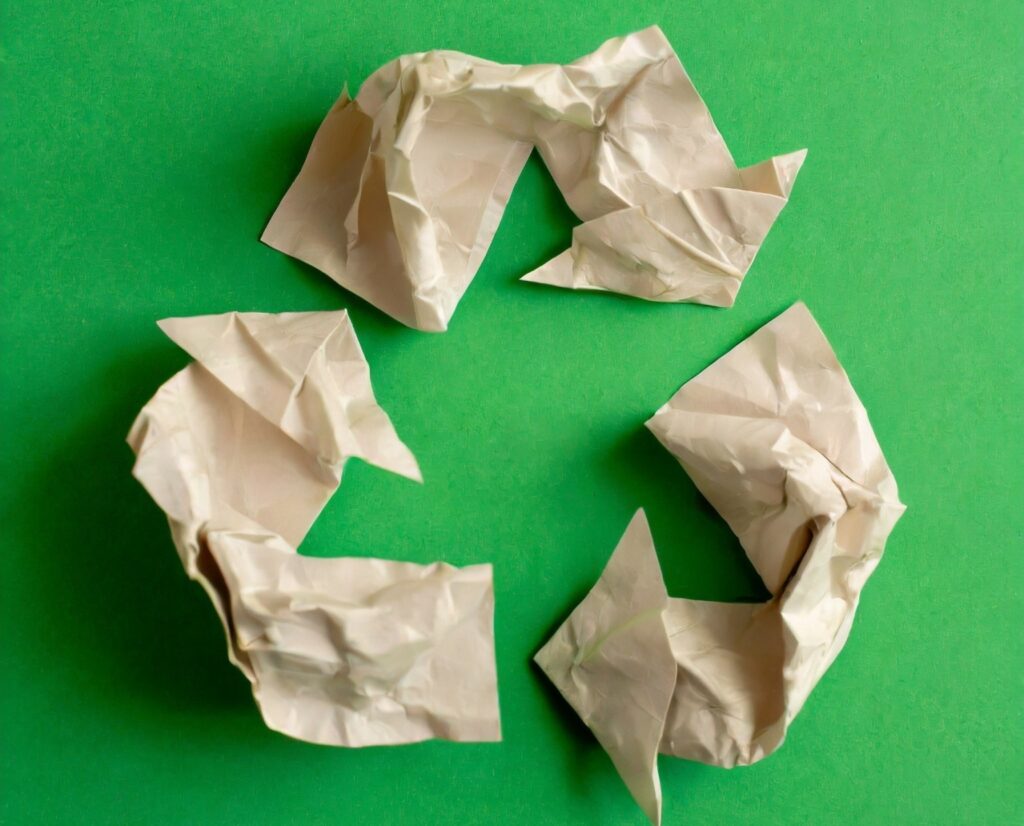
In the 21st century, papermaking and the way we use paper continue to evolve, reflecting both technological advances and environmental concerns. Recycled paper products have become a cornerstone of sustainable practices, vastly reducing the environmental impact of papermaking. Meanwhile, innovations in materials science have given rise to specialty papers with unique properties, such as waterproofing, fire resistance, and biodegradability.
Digital technology has challenged the dominance of paper in some areas, but it nonetheless remains irreplaceable in many aspects of modern life. From artistic expression to scientific research, paper retains its versatility and relevance. A growing emphasis on eco-friendly production methods ensures that paper will remain an integral part of our lives for generations to come.
Sources
https://teachinghistory100.org/objects/about_the_object/mesopotamian_writing_tablet
https://www.britannica.com/biography/Cai-Lun
https://thediplomat.com/2016/01/the-battle-that-kept-the-chinese-out-of-central-asia
https://www.britannica.com/technology/Fourdrinier-machine
For more page-turning facts about paper, visit Love Paper North America.